Constraint costs have become one of the most contested issues in the UK energy transition – often framed as evidence that our national energy policy is failing.
In reality, the picture is more complex. While headlines focus on wind farms being paid to turn down, the underlying drivers of constraint costs lie in how the electricity system has evolved – from historic network investment decisions to the ongoing role of gas in balancing the system.
In this first paper in a new Regen insight series, we unpack what transmission constraints are, why they've increased, and what's really driving the cost. Understanding this is vital because misdiagnosing the problem risks undermining investment in the infrastructure needed to deliver a clean power system.
In our follow-up paper, Meeting the Constraint Challenge, we'll review the Reformed National Pricing proposals and take a broader look at the policy interventions and reform levers that could reduce constraint costs and volumes. We'll also consider market innovations and technical and digital solutions that could provide a pathway to a more efficient and smarter energy system.
Why constraint costs are rising – and why the narrative matters
Constraint costs have risen sharply in recent years, reaching around £1.7bn annually and adding around £20 to the average annual household bill. This has led to growing political and media attention, often focused on payments to wind farms to reduce output.
Media coverage of constraint costs often simplifies a complex system issue
But this framing tells only part of the story. Constraint costs arise when electricity cannot flow freely across the network. Managing this requires the system operator to reduce generation in one location and increase it elsewhere – often relying on gas generation, which drives a significant share of the cost.
A system issue – not a renewables issue
While wind generation frequently appears in constraint data, this is largely because it is often the lowest-cost generation to curtail given the location of cost-driving transmission constraints, not because it is the root cause of the constraint.
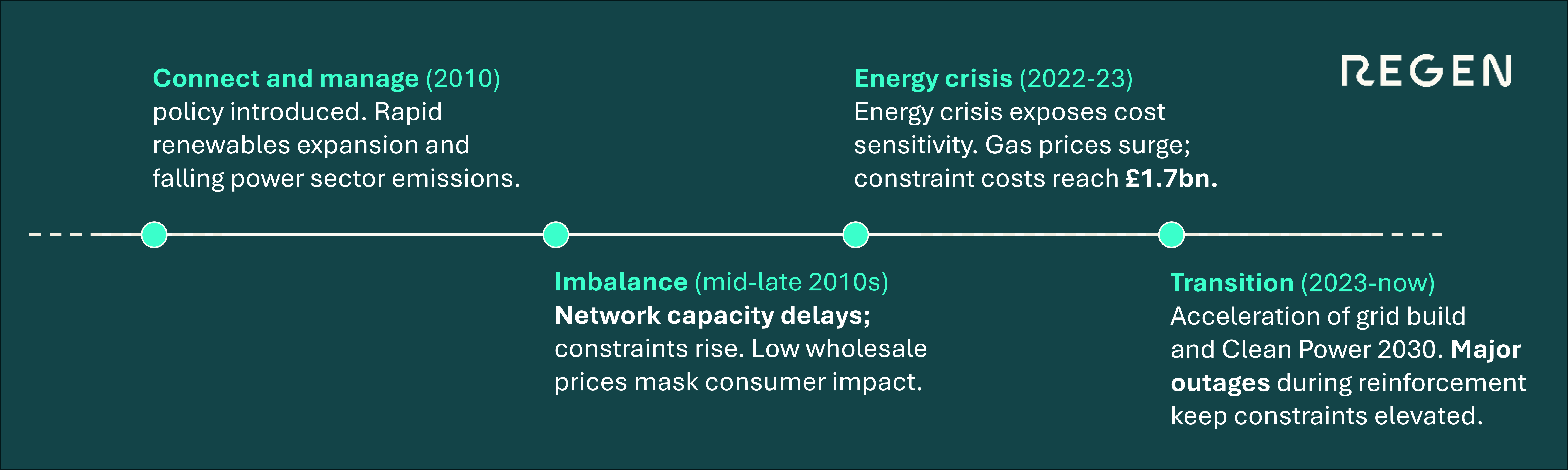
The constraints we see today are downstream of historic decisions about where generation was built and when network investment was delivered, high prices during the energy crisis, and ongoing outages in support of network reinforcement and expansion.
A timeline of important historical factors which have contributed to recent high constraint costs
As such, the constraints problem represents the complex interaction of multiple factors – understanding these dynamics is essential to avoid simplistic conclusions about the role of renewables in the system.
What this paper covers
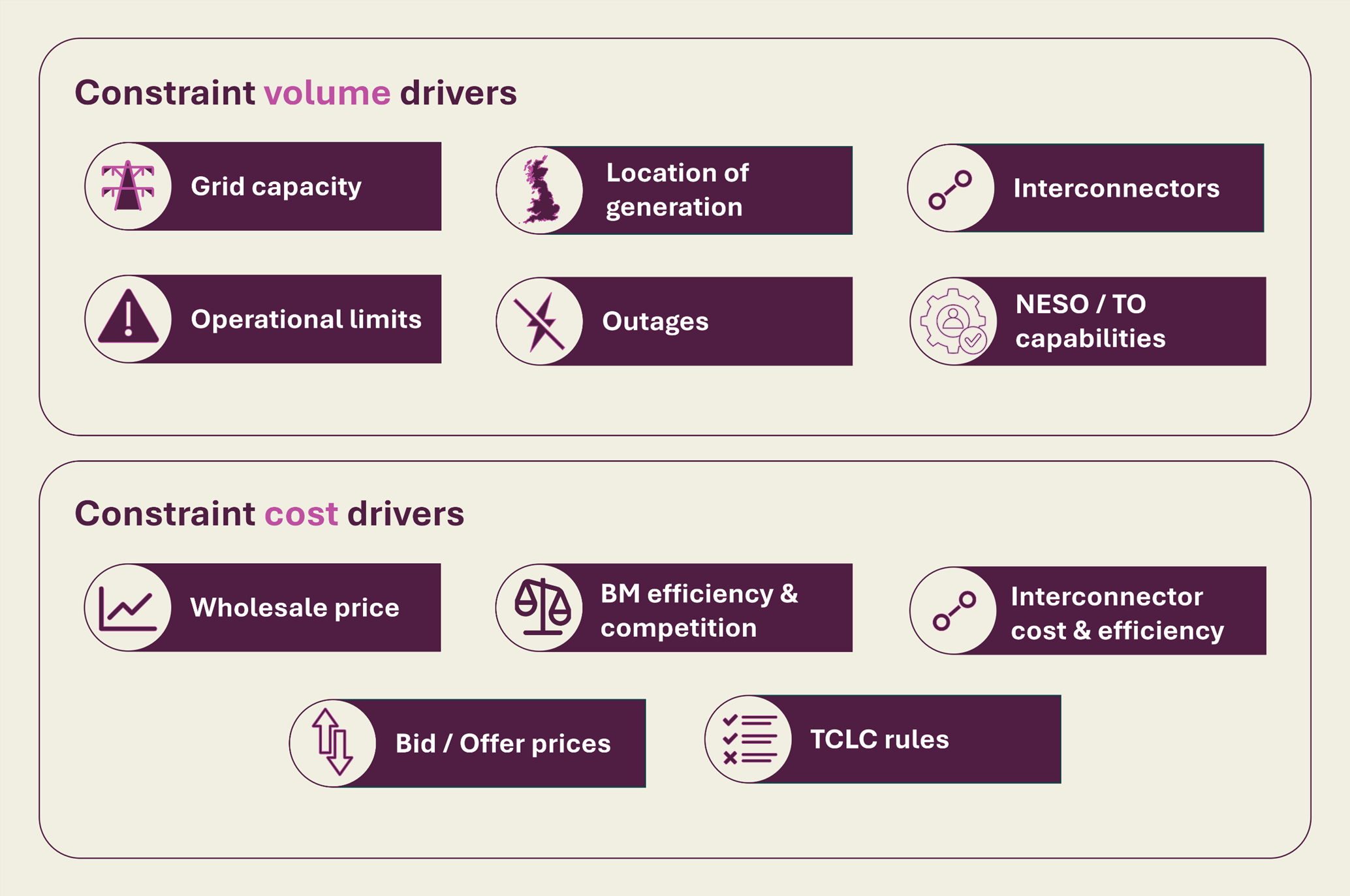
This first paper focuses on how constraints arise and why costs have increased. It examines several factors driving constraint costs and volumes today. The paper also covers:
The history of constraint costs and the policy decisions that shaped them
How the transmission system operates and why constraints occur
Why constraints are concentrated in particular regions
How market dynamics influence the cost of managing them.
Constraint costs are shaped by the complex interplay of several factors that influence power flows and the cost of managing them
A second paper will explore the actions that can be taken to reduce constraint costs, including changes to system operation, market design and network development. We will publish this after the government’s RNP plan is launched in the coming months.
Get in touch
If you’re interested in discussing our work on constraints management or Reformed National Pricing, please reach out to Andrew Barry, our markets lead, or Johnny Gowdy, our director.
Regen is a membership organisation – we provide our members with regular updates and market insight, and frequently convene diverse voices from across the sector to discuss key issues affecting the energy transition. If you're interested in Regen membership, see our membership page or reach out to Hannah Stanley.



%20(1).jpg)


.jpg)